U.S. Sets Preliminary Penalties on Chinese Wire Decking
The U.S. Commerce Department said on Tuesday that it has set preliminary countervailing duties (CVD) on imports of steel wire decking from China, a move that might escalate trade disputes between the two countries.
The department said it "preliminarily determined that Chinese producers/exporters have received net countervailable subsidies ranging from 2.02 to 437.73 percent."
As a result of this preliminary determination, Commerce will instruct U.S. Customs and Border Protection to collect a cash deposit or bond based on these preliminary rates.
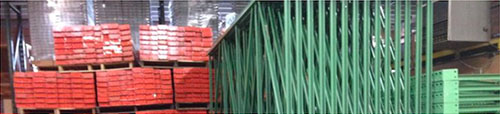
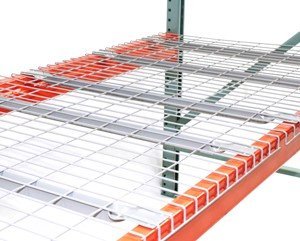
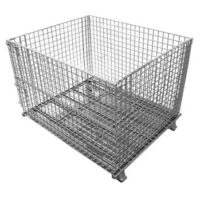
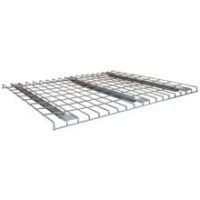
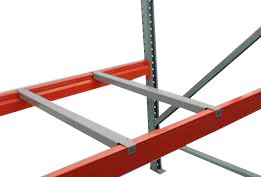
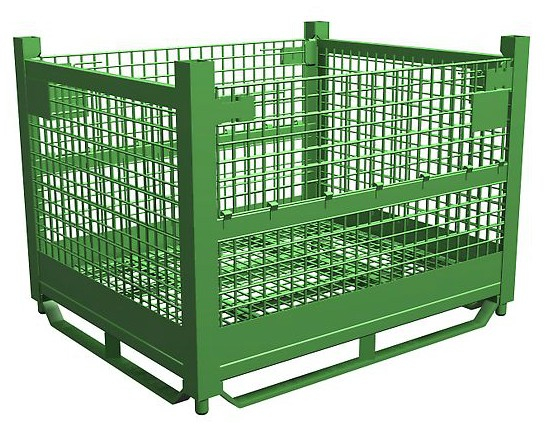
The product covered by this investigation is welded-wire rack decking produced from carbon or alloy steel wire that has been welded into a mesh pattern. The wire mesh is reinforced with structural supports and designed to be load bearing.
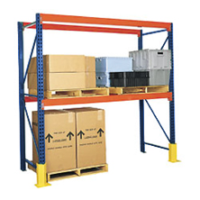
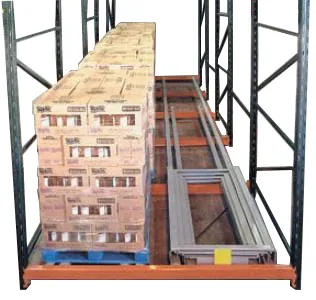
Wire decking reinforced with structural supports is designed generally for industrial and other commercial storage rack systems.
The Rack Manufacturers Institute (RMI) has specific testing requirements for pallet rack and wire decking. Most of the larger pallet rack & wire decking manufacturer's are members of RMI. If you are buying a product and it has the "R-Mark" it tells you that the product has been quality tested. The pallet rack and wire decking that my company sells have been manufactured to RMI specifications.
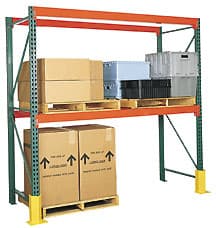
There are some things to consider when you select, install, use and maintain your pallet rack system:
Before buying rack you should analyze the volume of activity and number of SKU's in your warehouse to determine the appropriate amount of rack.
Choose a rack layout that best suits your building and requirements. Try to design the rack layout to reduce steps and increase efficiency.
Develop a rack elevation which shows number of beam levels and spacing of beam levels.
Develop a bill of material (B.O.M) with quantity and sizes of upright frames and beams.
I had an interesting conversation with Patrick Russell, Terminal Manager at Active USA in Chillicothe, OH. He is a Six Sigma Black Belt and he is implementing the Kaizen philosopy of lean manufacturing with value added items. According to Wikipedia, Six Sigma is a business management strategy, initially implemented by Motorola, that today enjoys widespread application in many sectors of industry:
Six Sigma seeks to identify and remove the causes of defects and errors in manufacturing and business processes. It uses a set of quality manufacturing methods, including statistical methods, and creates a special infrastructure of people within the organization ("Black Belts" etc.) who are experts in these methods. Each Six Sigma project carried out within an organization follows a defined sequence of steps and has quantified financial targets (cost reduction or profit increase).
Patrick's goal is to reduce waste by 20%. By implementing some Kaizen steps he has been able to cut
Allen Klippel, SIOR, First Vice President, CB Richard Ellis, gives commentary on the dominant trends in the 2009 St. Louis industrial real estate market. He also discusses the impact of this paradigm shift in the industrial market.
“Over the last several years, St. Louis, MO has become recognized as a distribution hub for such fortune 500 companies as Dial, Unilever, Proctor & Gamble, Hershey Foods, Save-A-Lot, companies supplying the Chrysler & GM plants have also been a positive factor in our market. The economic slow down has put the brakes on facility expansion for many big name companies and auto manufacturer’s are starting to give back space as well. But we still see local and regional companies anywhere from 25,000 to 50,000 square feet active in the market.”
As for the impact of the paradigm shift on the industrial market, “Most notable may be the over built situation that we currently have in the big box distribution projects. Even as demand began to slow, local and national developers continued to build. Today there are a number of state of the art distribution center buildings ranging in size from 200,000 square feet to 500,000 square feet available for lease. With a halt in new construction it is our opinion that supply and demand will balance in the foreseeable future and that this excess warehouse capacity will disappear. But I believe that today, matter of fact right now today, is a historic opportunity for tenants in the market place.”
What are the hot spots in the industrial market right now?
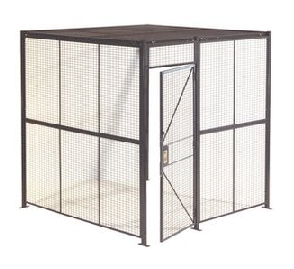
I got a call from the plant manager at a food processing plant and he told me that the United States Department of Agriculture was mandating that he add folding security gates to all of the dock doors and man doors in his warehouse in an effort to protect the food supply. He was wanting to buy folding scissor gates and woven wire partitions to secure his building. Folding security gates are a very seasonal product. We sell lots of these gates in the spring and summer months. Steel folding gates are used for ventilation, visibility and access control. They provide the ability to secure receiving doors, lift-up doors, entranceways, hallways and more.
Out of curiosity I contacted the USDA and spoke to a nice gentleman that told me the USDA does not mandate these changes. The USDA recommends that companies make food security part of their business plan. I was told that after 9-11-01 in an effort to improve homeland security, The USDA's Food Safety & Inspection Service (FSIS) offered a set of security guidelines for food processors. This was intended to protect the nations food supply from terrorist attack. The USDA asks food processors and food distributors to consider food security and draw up voluntary plans. The USDA offers an industry self-assessment checklist for food security. This USDA Food Security Checklist covers the following subjects:
The largest pallet rack manufacturer in the world, Mecalux Group, has acquired the largest rack manufacturer in the United States, Interlake Material Handling, Inc. out of bankruptcy. After the acquisition the American division of Mecalux will be known as Interlake Mecalux. Together they will become one of the world's leaders in capacity and technology in the storage industry. The following is from a Mecalux press release dated March 6th, 2008:
The purchase, which totals 30 million dollars, includes the acquisition of the companies of UFC Interlake, the commerical network, all industrial properties, patents, trademarks, technology and the four plants for the American expansion of Mecalux: Pontiac, IL; Sumter, SC; Mexicali and Matamoros, Mexico.
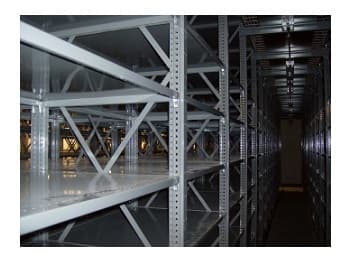
In 1996 I had the pleasure of racking Kuna Meat's new warehouse and distribution center located in Bussen underground warehouse. It was the first time I had ever been in an underground warehouse. The warehouse space was very clean, bright and state of the art. Not like what you might expect in an underground cave. You will be amazed at the many advantages you will find in underground warehousing and storage.
The Bussen Underground Warehouse is located in south St. Louis county, MO. According to their website, "The Bussen Underground Warehouse is a limestone mine that was engineered and mined for the specific purpose of creating a climate controlled warehouse. The constant year-round temperature within finished space is between 65 and 72 degrees. It provides an ideal working temperature for your employees. Several tenants have added cooling capacity to bring the temperature down to zero degrees for freezer space, or 35 degrees for cooler space. They have enjoyed utility savings of up to seventy percent!"
When you think of an underground cave, what image comes to mind? Do you envision stalagmites, dampness and nocturnal creatures? Maybe even Batman’s subterranean headquarters, a secret government warehouse that stores evidence of extraterrestrial life, or maybe an old haunted mine?
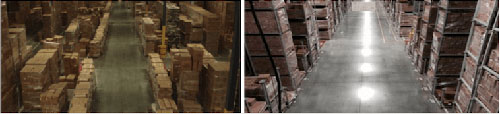
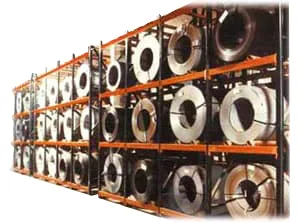
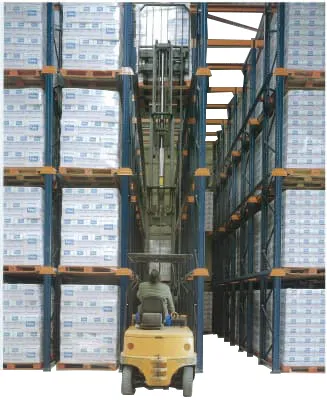
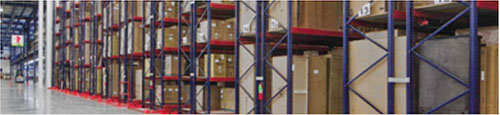
As you take the tour notice that the staging area is to the left in front of the dock doors. The rack rows are to the right and run in the direction of the dock doors easing the product flow. The pallet rack has a bottom beam level that is roughly 10"-12" off the floor. Bottom beam levels are commonly used with order pickers or stand up reach trucks with outriggers that extend off the front of the lift truck. A bottom beam level helps reduce forklift damage to the front leg of the uprights. The forklifts outriggers go under the bottom beam level when picking pallets. It is also important to use a beam that is longer than 96" when using stand up reach trucks with outriggers. Beam lenths of 102"-108" seperate the upright columns further apart which helps reduce damage from outriggers.
As I tell my customers, I will sell you rack any way you want to buy it. But I want to make sure your aware that your local building officials may require that you pull a permit before you install your pallet racks. It has to do with earthquakes. Now don't kill the messenger and before you storm off please let me explain. If your buying pallet rack I want to protect you from making a very costly mistake. Try telling the boss that the $30,000.00 of pallet rack that you just bought won't meet the codes as the building inspector puts a yellow tape around the rack. That's the wrong time to find out you needed to pull a permit.
I can make things real easy for you. I can have the engineers at the factory run a free seismic analysis to make sure that the rack that I'm quoting will meet your local building codes. Then it's up to you if you want to pull the permit. Atleast you have the peace of mind knowing that the rack that you purchased could meet the codes. Here's how it works. I need the answers to three simple questions:
1. What is the city, state & zip code where the rack is being installed?
2. How many beam levels (or shelf levels) do you have in your rack and how many inches apart are they spaced in relation to the floor? (Example: Storing 4 pallets high=Pallets on the floor, 1st beam level @ 48" off the floor, 2nd beam level @ 96" off the floor & 3rd (top) beam level @ 144" off the floor.)
3. What is the average amount of weight your storing on each beam level (or shelf level)? Another way to ask this question is what is the average weight per pallet and how many pallets do you store on a beam level?
After getting the answers to the questions above I can send you a seismic rack quotation with the following special notes: (For Example) Material has seismic pre-calcs. for MO 63045. All frames have a 5" x 7" x 3/8" enlarged seismic footplates. Customer is storing pallets on the floor plus three beam levels above. Beam levels spaced 48" apart. *See diagram. Customer is storing 1500 lbs. Ave. pallet weight. Customer is storing 3000 lbs. Ave. shelf weight. The factory is able to provide PE stamped and approved drawings (required for permitting) for approx. $950.00-$1500.00. Permitting by others.